The Pune Marathon is being held for the last 20 years and always wanted to be a part of it.So it was this decided that i will take part this year for sure .As decided started practicing for 4.5 kms run every day at the campus .....
This was in addition to the 2 km swimming i do everyday at the IIT pool.Intially it was difficult but eventually was able to make it ..
The Pune marathon was held on the 26th of Nov .I took part in the AIDS Charity Run which was of 4.5 kms cause was not sure if could make the 10km .Since this was my first marathon.
Started the race with lots of hoppala going around the deccan area where many enthu junta had come .
Lot many stars were around the place and and junta was too busy waving to them but i was focused to complete the run .
The run started from the Deccan chowk,Lakadi Bridge,Laxmi road, via vishrambaug wada ,end of bajirao road,making a turn from the back of Peshawe Park and then around Saraus Baug and ended at the Nehru Stadium.
Though its was just 4.5km junta may think but running in the heat with the sweat is really difficult but finally made it in time of 22mins.Though slow relatively but made it running the ACR completely .hurrrrrrrrrrrrraaaaaaaaaaaaaaaayuyyyyyyyyyyyyyyyyyy.
The next i will be trying for the half marathon at the Mumbai Marathon which is to held in the second week of January.I am trying to go there for running the 21 kms in the heat and humidity of Mumbai.
My sessions for the same have started with a initial run of 5km and then 2 km swim which really makes me tired but then 21kms is far away and i have to make it at the Mumbai Marathon.
PETA

Tuesday, November 28, 2006

Wednesday, October 04, 2006
Cricket Match
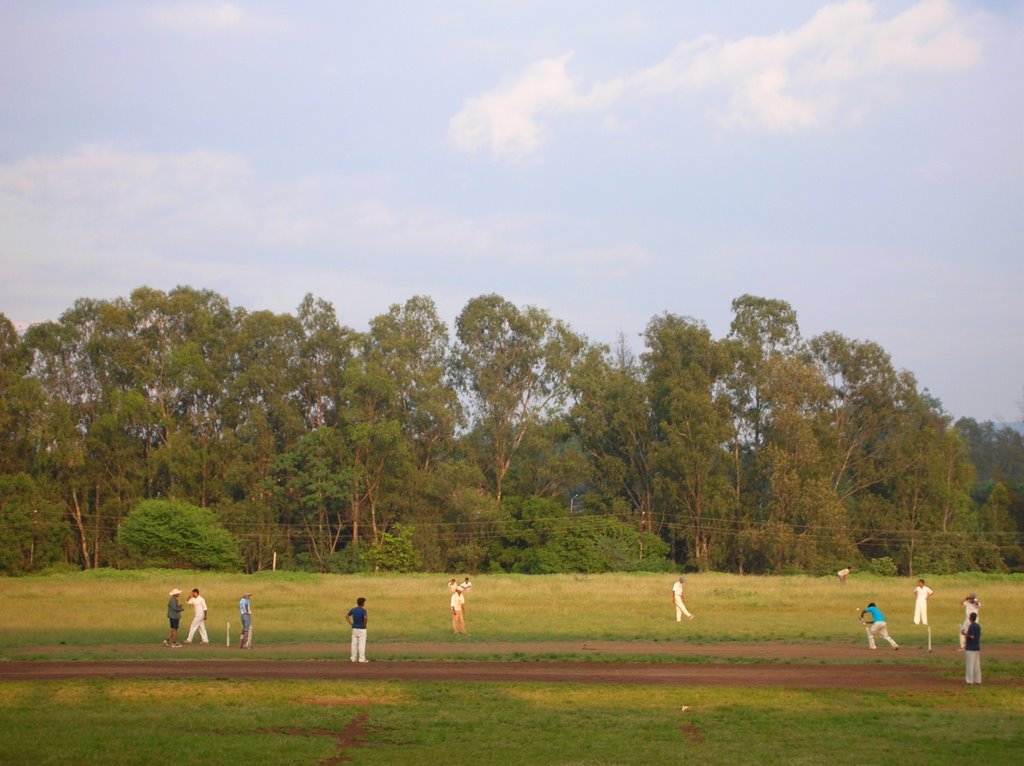
The last time i played for my college was at the Kaware Engineering Trophy back in 2001 .After that i played cricket but then it was just usual cricket with the tennis ball.And completely out of touch with complete gear cricket as you may call .
Just a couple of weeks back a few of us came up with the idea of playing a match between the Senior Players who repserented the college at the Inter-College Matches with the present team of the college .The Venue Anna Saheb Magar Statium ,Pimpri where quite a few presvious MCA matches are held.The offical time decided was 2nd October 2006 10:00 AM but it being Dassera the junta was late and the match started a bit late at around 12:00.
My mom scolded for running away to play cricket on such a day but then nothing could resist me not to go and play again .
So we all assembeled after a gap of almost 4 years together with the team spirit in the same high when we last played .
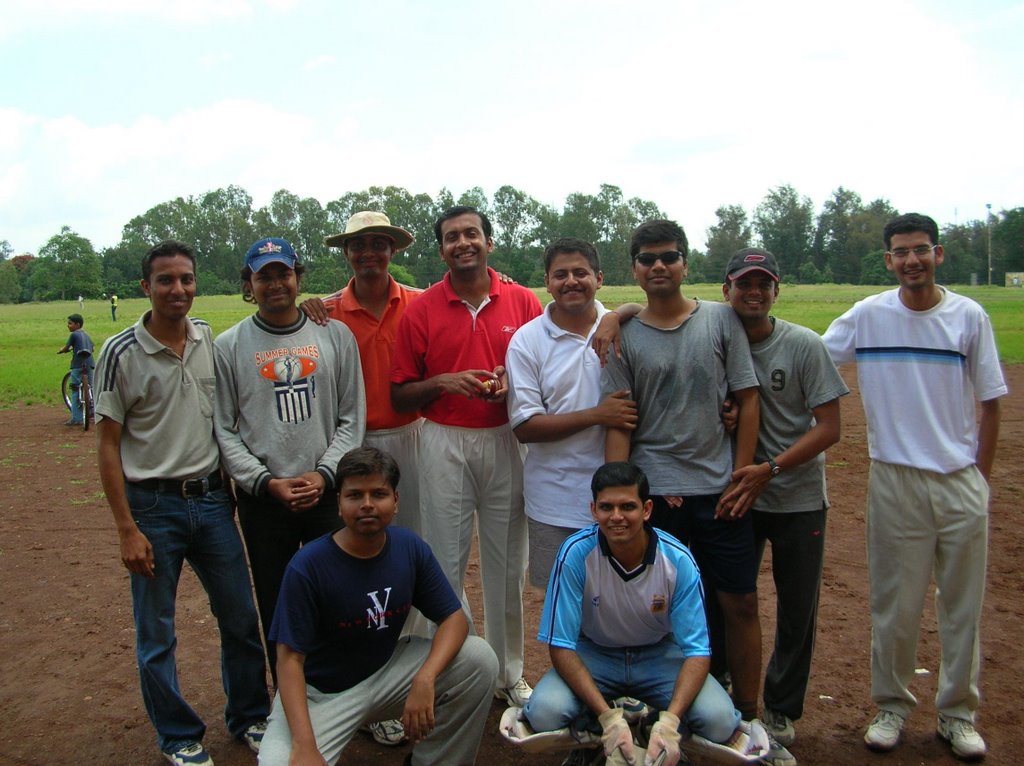 The team.Left to Right (Standing:Sandeep,Vikram,Kiran,Jeevan,Chetan,Amit,Shardul,Sagar.Sitting:-Paresh and Parag,Ritish-missing)
We lost the toss and the seniors were put into field .In 35 overs the present team managed a score of 117/All out .With some good bowling from Jeevan,Sandeep and Vikram.
We were put into bat then and intially lost the wicket of our opener Amit Dhaiwal the star for a DUCK .I stepped in one down and after some steady play with Paresh we made a good scoring around the field .But then some misunderstanding between me and Sagar and i was run out .........
Parag played steadly but he too got out after when we needed just SIX runs to win and we eventually lost the match .
But more than losing the match getting all together after a gap of almost 4-5 years was the most important thing and then playing it in the best of spirits .
A really good day as it was being DASSERA when the present team beat the Invincilble Team of 2002 .
The SCORES in Detail :-
DYPCOE Present Team
YASH(RHB) ----------- -----CAUGHT BEHIND --------------------- 01
JUNAID(LHB) --------------BOLD ---------------------------------- 06
PRASHANT(RHB) --------- LBW ----------------------------------- 10
VISHAL (RHB) ------------- CAUGHT -------------------------------- 29
RAHUL(RHB) -------------- RUN OUT ------------------------------ 00
SIDDHARTH (RHB) ------- CAUGHT -------------------------------- 13
MRIDUL(LHB) ------------- CAUGHT ------------------------------- 08
PIYUSH (RHB) --------------LBW ----------------------------------- 07
KAPIL(RHB) -----------------CAUGHT ------------------------------- 05
ABHIJEET(RHB) ---------- - NOT OUT ------------------------------ 01
EXTRAS :- 38
TOTAL : 117/ ALL OUT IN 26 OVERS
DYPCOE SENIORS
AMIT(RHB) ------------------ CAUGHT BEHIND ------------------- 00
PAREHS(RHB) --------------- CAUGHT ---------------------------- 08
CHETAN(LHB) --------------- RUN OUT --------------------------- 11
SAGAR (RHB) ---------------- CAUGHT --------------------------- 06
SHARDUL(RHB) ------------- BOWLED ---------------------------- 00
JEEVAN(RHB) --------------- CAUGHT ---------------------------- 14
PARAG(RHB) ---------------- RUN OUT --------------------------- 18
VIKRAM (RHB) -------------- STUMPED -------------------------- 08
KIRAN(RHB) ------------------- BOLD ------------------------------- 04
RITISH(RHB) ------------------- NOT OUT ------------------------- 05
SANDEEP(RHB) ----------------- DNB
EXTRAS:- 38
TOTAL : 112/ALL OUT IN 28.6 OVERS
AMIT(RHB) ------------------ CAUGHT BEHIND ------------------- 00
PAREHS(RHB) --------------- CAUGHT ---------------------------- 08
CHETAN(LHB) --------------- RUN OUT --------------------------- 11
SAGAR (RHB) ---------------- CAUGHT --------------------------- 06
SHARDUL(RHB) ------------- BOWLED ---------------------------- 00
JEEVAN(RHB) --------------- CAUGHT ---------------------------- 14
PARAG(RHB) ---------------- RUN OUT --------------------------- 18
VIKRAM (RHB) -------------- STUMPED -------------------------- 08
KIRAN(RHB) ------------------- BOLD ------------------------------- 04
RITISH(RHB) ------------------- NOT OUT ------------------------- 05
SANDEEP(RHB) ----------------- DNB
EXTRAS:- 38
TOTAL : 112/ALL OUT IN 28.6 OVERS
FINAL SCORE : THE PRESENT TEAM WINS BY 6 RUNS
Tuesday, May 02, 2006
Deep Purple – Introduction
Deep Purple is the name of a British rock group, and is also the name of a song composed by Peter De Rose, from which the band borrowed its name. They are one of the first and most famous hard rock bands. They are considered pioneers of heavy metal, though have never considered themselves a heavy metal band.
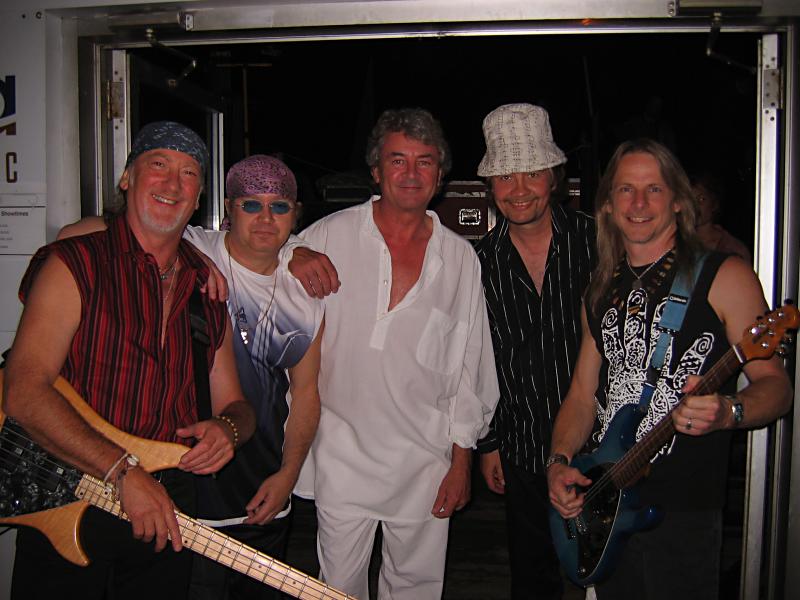 Roger Glover, Ian Paice, Ian Gillan, Don Airey, Steve Morse during their North America Tour in 2004
One of my favourite bands that I like to listen all the time .Can listen to them any time any where .I got the opportunity to go for the live show at Calgary ,Canada in September 2004 during their North America tour .
I had a gr8 time then during the live performance at the show by what they call the GOD of HEAVY METAL .........
Pre-History
The band Episode Six released several singles in the UK during the mid-sixties. It featured Ian Gillan on vocals, Graham Dimmock on guitar, Roger Glover on bass, Tony Lander on guitar, Sheila Carter on keyboards, and Harvey Shields on the drums. Despite extensive touring, they never had their big break.
In 1967, a band called The Flowerpot Men and their Garden was formed, formerly known as The Ivy League. It was concentrated on a trio of singers. The new name was clearly derived from the children's show The Flowerpot Men, with the obvious psychedelic-era puns on flower power and "pot". The band's most popular song was "Let's Go To San Francisco." Some listeners assumed that the song was a parody of Scott McKenzie's "If You're Going to San Francisco," but the band has denied this. It featured Tony Burrows, Neil Landon, Robin Shaw, and Pete Nelson on vocals, Ged Peck on guitar, Nick Simper on bass, Jon Lord on organ, and Carlo Little on drums. Jon Lord had formerly played in The Artwoods, Nick Simper had been with Screaming Lord Sutch's The Savages, where he also played with guitarist Ritchie Blackmore.
The Dawn of Purple
In 1967, former Searchers drummer Chris Curtis contacted London businessman Tony Edwards in the hope that he would manage a new group he was putting together. Curtis’ idea was that the members of the group would get on and off a musical roundabout, and suitably impressed, Edwards agreed to finance the venture with a couple of business partners, John Coletta and Ron Hire (Hire-Edwards-Coletta – HEC Enterprises).
Curtis then set about building up the group, to be known as Roundabout. His first encounter was with Hammond organ player Jon Lord, then he persuaded session guitarist Ritchie Blackmore to return from Hamburg, Germany, to audition for the new group. Curtis himself, however, soon dropped out, but HEC Enterprises, as well as Lord and Blackmore, were keen that the project should continue, so firstly bassist Nick Simper, then finally vocalist Rod Evans and drummer Ian Paice (both of whom were from the group The Maze), were recruited. After their first few gigs on a brief tour of Denmark in the spring of 1968, the band agreed on a new name suggested by Ritchie – Deep Purple.
In October 1968, the group had tremendous success in the US (but not the UK) with a cover of Joe South's "Hush," taken from their debut album Shades of Deep Purple, and they were duly booked to support Cream on their Goodbye tour. However they were soon kicked off the tour, allegedly because they were upstaging the headlining act! In 1969, two more albums followed: The Book of Taliesyn and Deep Purple, the latter of which contained a symphony orchestra on some tracks. After these three albums and extensive touring in the States, Rod Evans and Nick Simper were unceremoniously sacked, and replaced by vocalist Ian Gillan and bassist Roger Glover both ex-Episode Six. This would create the quintessential Deep Purple "Mark 2" lineup. Initially, this version of the band released a single probably influenced by the then-popular stage musical "Hair", a cover of a Greenaway-Cook tune titled "Hallelujah", which flopped, and then the Concerto for Group and Orchestra, a three-part movement written by Lord and performed at the Royal Albert Hall with the London Philharmonic Orchestra conducted by Malcolm Arnold. Together with Five Bridges by The Nice, it was one of the first collaborations between a rock band and an orchestra, although at the time, certain members of Purple were less than happy at the group being tagged as "a group who played with orchestras" when actually what they had in mind was to develop the band into a much tighter, hard-rocking style.
Sunday, April 30, 2006
Deep Purple - The Legends ...
Ian Gillan (born Hounslow, Middlesex, August 19, 1945)
Ian joined Deep Purple from Episode Six in 1969. His first Purple album appearance was on ‘Concerto for Group and Orchestra’ but Gillan made his greatest vocal impact on ‘In Rock’, ‘Fireball’ and ‘Machine Head’. The band’s most famous anthem ‘Smoke On The Water’ emphasises his ability to deliver a lyric with smouldering intensity and rock’n’roll exuberance.Gillan led his own band during the late Seventies before rejoining Deep Purple for ‘Perfect Strangers’ in 1984. In 1989 he toured as Garth Rockett before releasing further solo albums including ‘Naked Thunder’ (1990), ‘Toolbox’ (1991) and Dreamcatcher (1998). Ian is presently working on several projects, both as a writer and vocalist, with a book under construction and a new solo album taking shape.
Roger Glover (born Brecon, Wales, November 30 1945)
The bass player and composer, joined Deep Purple from Episode Six in 1969, then left to become head of A&R at Purple Records. He wrote the ‘The Butterfly Ball’ (1974) concept album which yielded the hit song ‘Love is All’ sung by Ronnie James Dio. He worked as a producer with such bands as Nazareth and Status Quo, as well as working with Ian Gillan on their album ‘Accidentally On Purpose’ (1988). Roger played with Ritchie Blackmore’s Rainbow (1979-1984) before returning to Deep Purple in 1984. "The last eight years have been especially enjoyable. It is such a joy to be in the band now. After Steve joined it reawakened in me that feeling of why I was in the band in the first place. It’s like a great big adventure. That’s the way it was in the beginning and then, of course, politics and personalities, success and money get in the way of the fun. For a while it became a job or a bore. The last eight years have been the exact opposite. It’s back to the fun it was in the first place, which is a wonderful thing!”
Ian Paice (born June 29, 1948)
Deep Purple’s drummer since he joined the band (age 19) in 1968. Armed with a dazzlingly fast technique, Ian has also worked with Paice, Ashton & Lord, Gary Moore and Whitesnake.A recent highlight was guesting on Sir Paul McCartney’s ‘Run Devil Run’ (1999) rock’n’roll album. Steve Morse says about Ian Paice: “He’s like a real heavy Ringo. He’s just so good on the drums, but doesn’t want to make a big deal about it.”
Ian joined Deep Purple from Episode Six in 1969. His first Purple album appearance was on ‘Concerto for Group and Orchestra’ but Gillan made his greatest vocal impact on ‘In Rock’, ‘Fireball’ and ‘Machine Head’. The band’s most famous anthem ‘Smoke On The Water’ emphasises his ability to deliver a lyric with smouldering intensity and rock’n’roll exuberance.Gillan led his own band during the late Seventies before rejoining Deep Purple for ‘Perfect Strangers’ in 1984. In 1989 he toured as Garth Rockett before releasing further solo albums including ‘Naked Thunder’ (1990), ‘Toolbox’ (1991) and Dreamcatcher (1998). Ian is presently working on several projects, both as a writer and vocalist, with a book under construction and a new solo album taking shape.
Roger Glover (born Brecon, Wales, November 30 1945)
The bass player and composer, joined Deep Purple from Episode Six in 1969, then left to become head of A&R at Purple Records. He wrote the ‘The Butterfly Ball’ (1974) concept album which yielded the hit song ‘Love is All’ sung by Ronnie James Dio. He worked as a producer with such bands as Nazareth and Status Quo, as well as working with Ian Gillan on their album ‘Accidentally On Purpose’ (1988). Roger played with Ritchie Blackmore’s Rainbow (1979-1984) before returning to Deep Purple in 1984. "The last eight years have been especially enjoyable. It is such a joy to be in the band now. After Steve joined it reawakened in me that feeling of why I was in the band in the first place. It’s like a great big adventure. That’s the way it was in the beginning and then, of course, politics and personalities, success and money get in the way of the fun. For a while it became a job or a bore. The last eight years have been the exact opposite. It’s back to the fun it was in the first place, which is a wonderful thing!”
Ian Paice (born June 29, 1948)
Deep Purple’s drummer since he joined the band (age 19) in 1968. Armed with a dazzlingly fast technique, Ian has also worked with Paice, Ashton & Lord, Gary Moore and Whitesnake.A recent highlight was guesting on Sir Paul McCartney’s ‘Run Devil Run’ (1999) rock’n’roll album. Steve Morse says about Ian Paice: “He’s like a real heavy Ringo. He’s just so good on the drums, but doesn’t want to make a big deal about it.”
Deep Purple - Studio albums
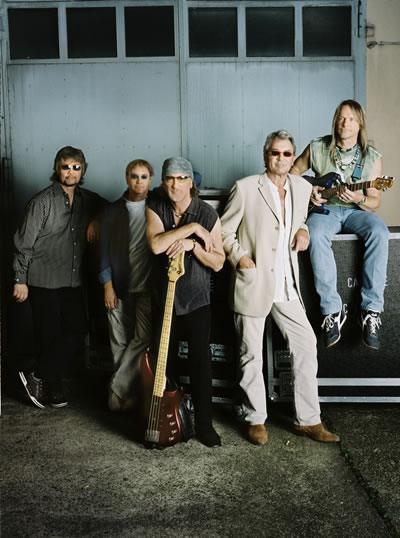
Mk I
o Shades of Deep Purple, September 1968 #24 US
o The Book of Taliesyn, December 1968 #54 US
o Deep Purple, November 1969 #162 US
• Mk II
o Deep Purple in Rock, June 1970 #4 UK, #143 US
o Fireball, September 1971 #1 UK, #32 US
o Machine Head, March 1972 #1 UK, #7 US
o Who Do We Think We Are, February 1973 #4 UK, #15 US
• Mk III
o Burn, February 1974 #3 UK, #9 US
o Stormbringer, December 1974 #6 UK, #20 US
• Mk IV
o Come Taste the Band, October 1975 #19 UK, #43 US
• Mk II, reunited
o Perfect Strangers, November 1984 #5 UK, #17 US
o The House of Blue Light, January 1987 #10 UK, #34 US
• Mk V
o Slaves & Masters, October 1990 # 45 UK, #87 US
• Mk II, again reunited
o The Battle Rages On, July 1993 #21 UK, #192 US
• Mk VII
o Purpendicular, February 1996
o Abandon, May 1998
• Mk VIII
o Bananas, August 2003
o Rapture of the Deep, October 2005
Live albums
• Mk I
o Live in Inglewood, 1968 (released 2004)
• Mk II
o Concerto for Group and Orchestra, 1969
o Kneel & Pray, 1969 (released 2004)
o Gemini Suite Live, 1970 (released 1998)
o Scandinavian Nights, 1970 (released 1988)
o Space Vol 1 & 2 , 1970 (released 2004)
o Made in Japan 1972, #16 UK, #6 US
o Deep Purple In Concert, 1970-1972 (released 1980) #30 UK
o Denmark 1972, 1972 (released 2004)
• Mk III
o Made in Europe, 1975, #12 UK, #148 US
o Live in London, 1974 (released 1982), #23 UK
o Just Might Take Your Life , 1974 (released 1996 2004)
o Perks And Tit, 1974 (released 2004)
o Mk III: The Final Concerts, 1975 (released 1996)
• Mk IV
o Last Concert in Japan, 1976
o King Biscuit Flower Hour Presents: Deep Purple in Concert(=On the Wings of a Russian Foxbat) = , 1975 (released 1995)
o This Time Around: Live in Tokyo, 1975 (released 2001)
• Mk II, reunited
o Nobody's Perfect, 1987 (released 1988) #38 UK, #105 US
o In The Absence of Pink: Knebworth 85, 1985 (released 1991)
o Come Hell or High Water, 1993, (released 1994)
o Live In Europe 1993, 1993 (4-CD box set - due for release March 2006)
• Mk VII
o Live at the Olympia '96, 1996 (released 1997)
o Total Abandon: Live in Australia, 1999
o In Concert with the London Symphony Orchestra, 1999
o Live At The Rotterdam Ahoy, 2000
o The Soundboard Series, 2001
Compilation Albums
• Purple Passages, September 1972; # 57 US
• 24 Carat Purple, July 1975; #14 UK
• The Mark II Purple Singles, April 1979; #24 UK
• When We Rock, We Rock, and When We Roll, We Roll, 1978
• Deepest Purple: The Very Best of Deep Purple, July 1980; #1 UK, #148 US
• The Anthology, June 1985; # 50 UK
• 30: Very Best of Deep Purple, October 1998; #39 UK
• Listen, Learn, Read On, October 29, 2002 (6 disc box set)
• Winning Combinations: Deep Purple and Rainbow, 2003
• Deep Purple: The Platinum Collection, 2005
Hit singles
• 1968 "Hush" #4 US
• 1968 "Kentucky Woman" #38 US
• 1969 "River Deep - Mountain High" # 53 US
• 1970 "Black Night" #2 UK, # 66 US
• 1971 "Strange Kind of Woman" #8 UK
• 1971 "Fireball" #15 UK
• 1972 "Never Before" #35 UK
• 1973 "Smoke on the Water" #21 UK (1977 release), # 4 US
• 1973 "Woman From Tokyo" # 60 US
• 1974 "Might Just Take Your Life" # 91 US
• 1977 "New Live and Rare EP" #31 UK (including an unheard live version of Black Night)
• 1978 "New Live and Rare EP II" # 45 UK
• 1980 "Black Night" (reissue) # 43 UK
• 1980 "New Live and Rare EP III" # 48 UK (including Smoke on the Water)
• 1985 "Knocking at Your Back Door" # 61 US
• 1985 "Perfect Strangers" # 48 UK
• 1985 "Knocking at Your Back Door / Perfect Strangers" # 68 UK
• 1988 "Hush" (re-recording) # 62 UK
• 1990 "King Of Dreams" # 70 UK
• 1991 "Love Conquers All" # 57 UK
• 1995 "Black Night" (reissue) # 66 UK (remastered CD single)
Deep Purple - Personnel and discography
Deep Purple personnel
Mk I
(1968-1969)
• Rod Evans - vocals
• Ritchie Blackmore - guitar
• Jon Lord - keyboards
• Nick Simper - bass guitar
• Ian Paice - drums
Mk II
(1969-1973)
• Ian Gillan - vocals
• Ritchie Blackmore - guitar
• Jon Lord - keyboards
• Roger Glover - bass guitar
• Ian Paice - drums
Mk III
(1973-1975)
• David Coverdale - vocals
• Ritchie Blackmore - guitar
• Jon Lord - keyboards
• Glenn Hughes - bass guitar,vocals
• Ian Paice - drums
Mk IV
(1975-1976)
• David Coverdale - vocals
• Tommy Bolin - guitar
• Jon Lord - keyboards
• Glenn Hughes - bass guitar,vocals
• Ian Paice - drums
(1976-1984) Band split.
Mk IIa, reunited
(1984-1989)
• Ian Gillan - vocals
• Ritchie Blackmore - guitar
• Jon Lord - keyboards
• Roger Glover - bass guitar
• Ian Paice - drums
Mk V
(1989-1991)
• Joe Lynn Turner - vocals
• Ritchie Blackmore - guitar
• Jon Lord - keyboards
• Roger Glover - bass guitar
• Ian Paice - drums
Mk IIb, again reunited
(1992-1994)
• Ian Gillan - vocals
• Ritchie Blackmore - guitar
• Jon Lord - keyboards
• Roger Glover - bass guitar
• Ian Paice - drums
Mk VI
(1994)
• Ian Gillan - vocals
• Joe Satriani - guitar
• Jon Lord - keyboards
• Roger Glover - bass guitar
• Ian Paice - drums
Mk VII
(1994-2002)
• Ian Gillan - vocals
• Steve Morse - guitar
• Jon Lord - keyboards
• Roger Glover - bass guitar
• Ian Paice - drums
Mk VIII
(2002-present)
• Ian Gillan - vocals
• Steve Morse - guitar
• Don Airey - keyboards
• Roger Glover - bass guitar
• Ian Paice - drums
The various line-ups in the history of Deep Purple are referred to by fans and the band themselves by "Mark" numbers (abbreviated as Mk I, Mk II, etc.) The "gap" in the numbering, Mk VI, refers to the series of concerts performed with Joe Satriani on guitar, when Ritchie Blackmore quit the band halfway through the tour in 1994. This is the only lineup for which no official recordings have yet been released.
Mk I
(1968-1969)
• Rod Evans - vocals
• Ritchie Blackmore - guitar
• Jon Lord - keyboards
• Nick Simper - bass guitar
• Ian Paice - drums
Mk II
(1969-1973)
• Ian Gillan - vocals
• Ritchie Blackmore - guitar
• Jon Lord - keyboards
• Roger Glover - bass guitar
• Ian Paice - drums
Mk III
(1973-1975)
• David Coverdale - vocals
• Ritchie Blackmore - guitar
• Jon Lord - keyboards
• Glenn Hughes - bass guitar,vocals
• Ian Paice - drums
Mk IV
(1975-1976)
• David Coverdale - vocals
• Tommy Bolin - guitar
• Jon Lord - keyboards
• Glenn Hughes - bass guitar,vocals
• Ian Paice - drums
(1976-1984) Band split.
Mk IIa, reunited
(1984-1989)
• Ian Gillan - vocals
• Ritchie Blackmore - guitar
• Jon Lord - keyboards
• Roger Glover - bass guitar
• Ian Paice - drums
Mk V
(1989-1991)
• Joe Lynn Turner - vocals
• Ritchie Blackmore - guitar
• Jon Lord - keyboards
• Roger Glover - bass guitar
• Ian Paice - drums
Mk IIb, again reunited
(1992-1994)
• Ian Gillan - vocals
• Ritchie Blackmore - guitar
• Jon Lord - keyboards
• Roger Glover - bass guitar
• Ian Paice - drums
Mk VI
(1994)
• Ian Gillan - vocals
• Joe Satriani - guitar
• Jon Lord - keyboards
• Roger Glover - bass guitar
• Ian Paice - drums
Mk VII
(1994-2002)
• Ian Gillan - vocals
• Steve Morse - guitar
• Jon Lord - keyboards
• Roger Glover - bass guitar
• Ian Paice - drums
Mk VIII
(2002-present)
• Ian Gillan - vocals
• Steve Morse - guitar
• Don Airey - keyboards
• Roger Glover - bass guitar
• Ian Paice - drums
The various line-ups in the history of Deep Purple are referred to by fans and the band themselves by "Mark" numbers (abbreviated as Mk I, Mk II, etc.) The "gap" in the numbering, Mk VI, refers to the series of concerts performed with Joe Satriani on guitar, when Ritchie Blackmore quit the band halfway through the tour in 1994. This is the only lineup for which no official recordings have yet been released.
Deep Purple – Revival
Steve Morse’s arrival thoroughly revitalised the band as he is cited one the best and most accomplished modern guitarists. In 1996 the band released the critically acclaimed Purpendicular, which brimmed with confidence and new ideas. Deep Purple enjoyed success throughout the rest of the 1990s, releasing the harder-sounding Abandon in 1998, and touring with renewed relish, playing a setlist which was probably more adventurous and eclectic than ever before. In 1999, Jon Lord, with the help of a fan who was also a musicologist and composer, painstakingly recreated the Concerto for Group and Orchestra, and it was once again performed at the Royal Albert Hall in September 1999, this time with the London Symphony Orchestra conducted by Paul Mann. The concert also featured songs from each member’s solo careers, as well as a short Deep Purple set, and the occasion was commemorated on the 2000 album In Concert with the London Symphony Orchestra.
Much of the next few years was spent on the road via constant touring. The group continued forward until 2002, when venerable founding member Jon Lord (who, along with Ian Paice, was the only member to be in all incarnations of the band) announced his amicable retirement from the band to pursue personal projects (especially orchestral work). Rock keyboard veteran Don Airey (Rainbow/Whitesnake, etc.), who had helped Purple out when Lord was injured in 2001, joined the band. In 2003, Deep Purple released their first studio album in five years, the highly praised (but controversially titled) Bananas, and began touring in support of the album immediately. In October of 2005, the band's 37th year, Purple released Rapture of the Deep, which, although recorded in just a few weeks, proved to be the most progressive and adventurous album for many years, and it is being followed by yet another extensive world tour.
Deep Purple and Heavy Metal
Despite their association with the sub-genre, Deep Purple have never been a heavy metal band, though many later heavy metal bands cite their influence. The group has frequently changed styles and line-ups over the years, but has always included virtuoso players in its ranks and placed a high priority on musicianship. Some incarnations of Deep Purple have brought aspects of jazz and classical influences to a rock context due to their frequent use of their songs as vehicles for extended and sophisticated solos.
Today, Deep Purple steadfastly carries on in the studio and around the globe as one of history's most prolific, longest-lived, and hardest touring rock 'n roll bands.
Much of the next few years was spent on the road via constant touring. The group continued forward until 2002, when venerable founding member Jon Lord (who, along with Ian Paice, was the only member to be in all incarnations of the band) announced his amicable retirement from the band to pursue personal projects (especially orchestral work). Rock keyboard veteran Don Airey (Rainbow/Whitesnake, etc.), who had helped Purple out when Lord was injured in 2001, joined the band. In 2003, Deep Purple released their first studio album in five years, the highly praised (but controversially titled) Bananas, and began touring in support of the album immediately. In October of 2005, the band's 37th year, Purple released Rapture of the Deep, which, although recorded in just a few weeks, proved to be the most progressive and adventurous album for many years, and it is being followed by yet another extensive world tour.
Deep Purple and Heavy Metal
Despite their association with the sub-genre, Deep Purple have never been a heavy metal band, though many later heavy metal bands cite their influence. The group has frequently changed styles and line-ups over the years, but has always included virtuoso players in its ranks and placed a high priority on musicianship. Some incarnations of Deep Purple have brought aspects of jazz and classical influences to a rock context due to their frequent use of their songs as vehicles for extended and sophisticated solos.
Today, Deep Purple steadfastly carries on in the studio and around the globe as one of history's most prolific, longest-lived, and hardest touring rock 'n roll bands.
Deep Purple – The Reunions
In 1980, Rod Evans, along with a group of unknown musicians, toured under the banner of Deep Purple. As the only original member, and one little known to most fans, this band was instantly derided by press and fans as a fraud. The lineup performed concerts in Mexico and the USA before legal action was taken to deny them the use of the name. In retrospect, however tenuous the connection this band had to the name "Deep Purple", at least it kept the name alive and in the media, albeit briefly. More information on this "fake" Deep Purple is available here and here.
However, in April 1984, eight years after the demise of Deep Purple, a full-scale (and legal) reunion happened. It was announced on BBC radio's The Friday Rock Show that the "classic" early 70s line-up of Blackmore, Gillan, Glover, Lord, and Paice was reforming and recording new material. The band signed a deal with Polydor in Europe and Mercury in North America. The album Perfect Strangers was released in October 1984 and the tour followed, starting in Australia and winding its way across the world into Europe by the following summer. It was a tremendous success. The UK homecoming proved mixed as they elected to play just a single festival show at Knebworth (with main support from The Scorpions). The weather was famously bad but 80,000 turned up anyway.
The line-up recorded and toured The House of Blue Light in 1987 though to lower sales, a live album Nobody's Perfect (1988) was culled from several shows on this tour. While in the UK a new version of "Hush" was released to mark 20 years of the band. In 1989, Ian Gillan was fired from the band, as his relations with Blackmore soured. His replacement was former Rainbow vocalist Joe Lynn Turner. This line up recorded just one album, Slaves & Masters (1990), and toured in support of it. Despite the renewed excellence of the band during this period, many fans were not pleased with Turner, preferring Gillan.
With the tour done, Turner was forced to go as Lord, Paice, Glover, and the record company wanted Gillan back in the fold. Blackmore relented and the classic line-up recorded The Battle Rages On in 1993. During an artistically successful European tour during the fall of 1993, tensions between Gillan and Blackmore came to a head yet again. Blackmore walked out in November 1993, never to return and leaving the band in a fix. Joe Satriani was drafted in, so the live dates (in Japan) in December could be completed. Satriani stayed on for a European Summer tour in 1994, Satriani was asked to stay permanently although his record contract commitments prevented this. The band unanimously chose Dixie Dregs guitarist Steve Morse to become Blackmore's permanent successor.
However, in April 1984, eight years after the demise of Deep Purple, a full-scale (and legal) reunion happened. It was announced on BBC radio's The Friday Rock Show that the "classic" early 70s line-up of Blackmore, Gillan, Glover, Lord, and Paice was reforming and recording new material. The band signed a deal with Polydor in Europe and Mercury in North America. The album Perfect Strangers was released in October 1984 and the tour followed, starting in Australia and winding its way across the world into Europe by the following summer. It was a tremendous success. The UK homecoming proved mixed as they elected to play just a single festival show at Knebworth (with main support from The Scorpions). The weather was famously bad but 80,000 turned up anyway.
The line-up recorded and toured The House of Blue Light in 1987 though to lower sales, a live album Nobody's Perfect (1988) was culled from several shows on this tour. While in the UK a new version of "Hush" was released to mark 20 years of the band. In 1989, Ian Gillan was fired from the band, as his relations with Blackmore soured. His replacement was former Rainbow vocalist Joe Lynn Turner. This line up recorded just one album, Slaves & Masters (1990), and toured in support of it. Despite the renewed excellence of the band during this period, many fans were not pleased with Turner, preferring Gillan.
With the tour done, Turner was forced to go as Lord, Paice, Glover, and the record company wanted Gillan back in the fold. Blackmore relented and the classic line-up recorded The Battle Rages On in 1993. During an artistically successful European tour during the fall of 1993, tensions between Gillan and Blackmore came to a head yet again. Blackmore walked out in November 1993, never to return and leaving the band in a fix. Joe Satriani was drafted in, so the live dates (in Japan) in December could be completed. Satriani stayed on for a European Summer tour in 1994, Satriani was asked to stay permanently although his record contract commitments prevented this. The band unanimously chose Dixie Dregs guitarist Steve Morse to become Blackmore's permanent successor.
Deep Purple – Top of the World
Shortly after the orchestral release, the band began a hectic touring and recording schedule that was to see little respite for the next three years. Their first LP release, in mid-1970, went straight for the jugular in with Deep Purple in Rock and a UK Top Ten single followed with Black Night. A second album, Fireball, was issued in 1971, and the band also scored another chart hit with Strange Kind Of Woman. Together with Led Zeppelin and Black Sabbath, Purple were laying the groundwork for what is now called heavy metal music, although at the time, the phrase was still to be coined.
During 1972, Deep Purple continued to tour and record at a rate that would be rare thirty years on, releasing Machine Head, an album that was due to be recorded at a casino in Montreux, using the Rolling Stones' mobile recording truck, but after an arson attack during a Frank Zappa gig at the very same casino was actually recorded at a nearby hotel -- this incident famously inspiring the song Smoke on the Water. This album was followed a few months later by a live release, Made in Japan mostly recorded at two gigs in Osaka, which is today still one of rock music's most popular live concert recordings (although at the time it was perhaps seen as less important, as only two band members turned up to mix it).
The classic Purple Mk 2 line-up continued to work and record into 1973, releasing the album Who Do We Think We Are (1973), featuring the hit single Woman from Tokyo, but tensions within the band were more noticeable than ever. The bad feeling culminated in Ian Gillan quitting the band after another European tour, and Roger Glover being pushed out with him. Their replacements were an unknown singer from northern England, David Coverdale, and bassist Glenn Hughes, formerly of Trapeze. This new line-up continued into 1974 with the heavy blues/rock album Burn, another highly successful release. Hughes and Coverdale added a funky R&B/soul element to the band's music, a sound that was even more apparent on the 1974 release Stormbringer. Blackmore was not happy with the results, and as a result left the band in 1975 to form his own band Rainbow.
With Blackmore's departure, Deep Purple was left to fill one of the biggest vacancies in rock music. The gap was filled by American Tommy Bolin who had established himself with acts such as Zephyr, James Gang and Billy Cobham, with whom Bolin made his mark on the jazz fusion Spectrum album. On the face of it Bolin was just what the doctor ordered. The subsequent album, however, 1975's Come Taste the Band, proved unpopular with die-hard fans and failed to attract any new ones, perhaps since it was a radical departure from the expected Deep Purple sound. Bolin himself turned out not to be ready for the daunting job of filling Blackmore's shoes, suffering hostility from some crowds while turning in erratic performances varying from scintillating to mundane. Bolin also had a heroin habit, which made matters all the worse. After a particularly traumatic tour to promote Come Taste the Band, the band broke up. Bolin later died of a heroin overdose in Miami while on tour supporting Jeff Beck.
Subsequently, most of the past members of Deep Purple would go on to have considerable success in a number of other bands, including Rainbow, Whitesnake and Gillan, while there were a number of promoter-led attempts to get the band to reform, especially with the revival of the hard rock market in the late 70s/early 80s.
During 1972, Deep Purple continued to tour and record at a rate that would be rare thirty years on, releasing Machine Head, an album that was due to be recorded at a casino in Montreux, using the Rolling Stones' mobile recording truck, but after an arson attack during a Frank Zappa gig at the very same casino was actually recorded at a nearby hotel -- this incident famously inspiring the song Smoke on the Water. This album was followed a few months later by a live release, Made in Japan mostly recorded at two gigs in Osaka, which is today still one of rock music's most popular live concert recordings (although at the time it was perhaps seen as less important, as only two band members turned up to mix it).
The classic Purple Mk 2 line-up continued to work and record into 1973, releasing the album Who Do We Think We Are (1973), featuring the hit single Woman from Tokyo, but tensions within the band were more noticeable than ever. The bad feeling culminated in Ian Gillan quitting the band after another European tour, and Roger Glover being pushed out with him. Their replacements were an unknown singer from northern England, David Coverdale, and bassist Glenn Hughes, formerly of Trapeze. This new line-up continued into 1974 with the heavy blues/rock album Burn, another highly successful release. Hughes and Coverdale added a funky R&B/soul element to the band's music, a sound that was even more apparent on the 1974 release Stormbringer. Blackmore was not happy with the results, and as a result left the band in 1975 to form his own band Rainbow.
With Blackmore's departure, Deep Purple was left to fill one of the biggest vacancies in rock music. The gap was filled by American Tommy Bolin who had established himself with acts such as Zephyr, James Gang and Billy Cobham, with whom Bolin made his mark on the jazz fusion Spectrum album. On the face of it Bolin was just what the doctor ordered. The subsequent album, however, 1975's Come Taste the Band, proved unpopular with die-hard fans and failed to attract any new ones, perhaps since it was a radical departure from the expected Deep Purple sound. Bolin himself turned out not to be ready for the daunting job of filling Blackmore's shoes, suffering hostility from some crowds while turning in erratic performances varying from scintillating to mundane. Bolin also had a heroin habit, which made matters all the worse. After a particularly traumatic tour to promote Come Taste the Band, the band broke up. Bolin later died of a heroin overdose in Miami while on tour supporting Jeff Beck.
Subsequently, most of the past members of Deep Purple would go on to have considerable success in a number of other bands, including Rainbow, Whitesnake and Gillan, while there were a number of promoter-led attempts to get the band to reform, especially with the revival of the hard rock market in the late 70s/early 80s.
Saturday, April 01, 2006
Cycling Around the City ......
These days one of the activities has been going around on my new bycycle around the city .Its of the funfilled activity i have been doing recently ..
Just put on the apperals ,the helmet ,watch and here i go to roam on my BMW as i call her to roam and race with the scooters and moped at cruzing speed realtive to the cycle .
Now about my BMW.She is sleek with metallic blue colour,had 18 gears which can take me almost any where ,light frame a Hero DTB.
Till now i have been to the following long routes from my palce around the city --
Aundh - 20kms (10kms one way)
Deccan - 26 kms ( 13 kms one way )
Pune Camp - 48kms ( 24 kms one way)
Honeywell ,Hadapsar - 56 kms( 28kms one way ) thats my office .....
these are the long rides i have done from my home in the last couple of months and still to explore a lot lot more around .
Apart from this around my place i go aroud on my bike only almost everyday in the mornings or late evening after the traffice goes down.
Just put on the apperals ,the helmet ,watch and here i go to roam on my BMW as i call her to roam and race with the scooters and moped at cruzing speed realtive to the cycle .
Now about my BMW.She is sleek with metallic blue colour,had 18 gears which can take me almost any where ,light frame a Hero DTB.
Till now i have been to the following long routes from my palce around the city --
Aundh - 20kms (10kms one way)
Deccan - 26 kms ( 13 kms one way )
Pune Camp - 48kms ( 24 kms one way)
Honeywell ,Hadapsar - 56 kms( 28kms one way ) thats my office .....
these are the long rides i have done from my home in the last couple of months and still to explore a lot lot more around .
Apart from this around my place i go aroud on my bike only almost everyday in the mornings or late evening after the traffice goes down.
Thursday, March 23, 2006
Smooth As Silk: Mark Waugh
I have been a diehard Aussie fan since i have known cricket .And of them I admired Allan Border the Aussie gr8 first of all cause he is a genuine left hander like me and the other the capataincy he did for Australia in the mid eightes and early ninties . It all beacuse Border took the team to the winning streak in the Reliance World Cup that they have not come down a bit ..... of that till today .
And my all time favourite Mark Waugh .I have been his fan from the time he made his debut against England .Now its almsot 3 years that he has retired but still remains my alltime favourite player ........................

Mark Edward Waugh AM (born June 2, 1965 in Sydney) an Australian cricketer. Mark Waugh was a key figure in the powerful batting line-up of the Australian Test cricket team from 1991 to 2002, along with his twin brother, Steve Waugh. He was also a mainstay in the Australian ODI team, starting out as an all-rounder but he later progressed to opening the batting, where he excelled and became Australia's leading one day runscorer. Mark was one of the most elegant and gifted strokemakers to ever play the game. He was a handy medium pace, who changed to an off-spin bowler after back injuries caught up, he is regarded as one of the best slips fielders ever to play cricket, and holds the world record for most Test catches by a non-wicketkeeper. He is well-known for his general mastery of batting when facing spin bowling.
Career
Mark Waugh made his first class debut for New South Wales in the series of 1985/86. He made his name as an all-rounder at state level, but was overlooked for the Australian team early in his career in favour of his twin brother. In the late 1980s, the call for Mark to be selected for higher honours grew louder and he was named the Sheffield Shield player of the year twice, with an outstanding batting average of well over 50. He finally made his Test match debut for Australia against England in the fourth match of the series of 1990/91 at the Adelaide Oval. Ironically, his selection for this game was at the expense of his twin brother Steve, who had been a fixture in the side for years, but was suffering from a lack of form. Waugh marked his debut in style, scoring 138 in his first innings.Throughout the early years of his career, Mark was haunted by accusations that he was a "lazy" batsman, too apt to throw his wicket away. The "lazy" tag followed him for his whole career, despite many gritty, defiant innings that suggested otherwise. This perceived laziness was emphasized when compared to his twin brother Steve, a player renowned for his grit and determination, and his reputation of being one of the toughest batsmen to dismiss in world cricket. Over the next 11 years, Mark experienced the ups and downs of international cricket, his lowest moments being a run of four consecutive ducks against Sri Lanka in 1992/93 and the controversy of his being fined for accepting money from a bookmaker for pitch and weather information in 1994, that was made public four years later in 1998. Just a few of the many highlights of his international career were his 126 in the West Indies in 1995 to seal the Frank Worrell Trophy, scoring three centuries in the One Day International World Cup of 1996, and his highest Test score of 153 not out, scored in India in 1998, remarkable because he was suffering from nausea, diarrhoea and vomiting spells whilst batting.
He once famously lofted a ball bowled by left-arm finger spinner Daniel Vettori well into the stands, having historians searching for a bigger hit. He has been known for making comments against spinners. He called English spinner Phil Tufnell a "pretty weak fellow" and described his famous dismissal on 99 during the 1993 Lord's Test by Tufnell as "terrible bowling" and "a very negative piece of cricket". He retired from international cricket on October 28, 2002.
Mark Waugh was Australia's highest run-scorer in One Day International cricket, after breaking Allan Border's record in 1999, until it was broken in December 2005 by Ricky Ponting. He is widely regarded as one of the greatest One Day International openers of all time, having averaged over 45 in that position.
Mark Waugh retired from international cricket in 2002 after being dropped for the upcoming Test series against England. He retired as the world record holder for most Test catches, with 181. He had scored 8029 Test runs at an average of 41.81 and taken 59 Test wickets at an average of 41.16. In the one-day arena, he compiled 8500 runs at an average of 39.35 and took 85 wickets at an average of 34.56.
After Retirement
In 2005 Waugh was Acknowledged for his services to cricket when he was appointed a Member of the Order of Australia (AM). He now works as a sports journalist for the Sydney Morning Herald
He married for the first time on April 9, 2005 to harness racing driver and trainer Kim Moore.
Statistics :-
Batting style Right-handed batsman (RHB)
Bowling type Right-arm Off Break (OB)
And my all time favourite Mark Waugh .I have been his fan from the time he made his debut against England .Now its almsot 3 years that he has retired but still remains my alltime favourite player ........................

Mark Edward Waugh AM (born June 2, 1965 in Sydney) an Australian cricketer. Mark Waugh was a key figure in the powerful batting line-up of the Australian Test cricket team from 1991 to 2002, along with his twin brother, Steve Waugh. He was also a mainstay in the Australian ODI team, starting out as an all-rounder but he later progressed to opening the batting, where he excelled and became Australia's leading one day runscorer. Mark was one of the most elegant and gifted strokemakers to ever play the game. He was a handy medium pace, who changed to an off-spin bowler after back injuries caught up, he is regarded as one of the best slips fielders ever to play cricket, and holds the world record for most Test catches by a non-wicketkeeper. He is well-known for his general mastery of batting when facing spin bowling.
Career
Mark Waugh made his first class debut for New South Wales in the series of 1985/86. He made his name as an all-rounder at state level, but was overlooked for the Australian team early in his career in favour of his twin brother. In the late 1980s, the call for Mark to be selected for higher honours grew louder and he was named the Sheffield Shield player of the year twice, with an outstanding batting average of well over 50. He finally made his Test match debut for Australia against England in the fourth match of the series of 1990/91 at the Adelaide Oval. Ironically, his selection for this game was at the expense of his twin brother Steve, who had been a fixture in the side for years, but was suffering from a lack of form. Waugh marked his debut in style, scoring 138 in his first innings.Throughout the early years of his career, Mark was haunted by accusations that he was a "lazy" batsman, too apt to throw his wicket away. The "lazy" tag followed him for his whole career, despite many gritty, defiant innings that suggested otherwise. This perceived laziness was emphasized when compared to his twin brother Steve, a player renowned for his grit and determination, and his reputation of being one of the toughest batsmen to dismiss in world cricket. Over the next 11 years, Mark experienced the ups and downs of international cricket, his lowest moments being a run of four consecutive ducks against Sri Lanka in 1992/93 and the controversy of his being fined for accepting money from a bookmaker for pitch and weather information in 1994, that was made public four years later in 1998. Just a few of the many highlights of his international career were his 126 in the West Indies in 1995 to seal the Frank Worrell Trophy, scoring three centuries in the One Day International World Cup of 1996, and his highest Test score of 153 not out, scored in India in 1998, remarkable because he was suffering from nausea, diarrhoea and vomiting spells whilst batting.
He once famously lofted a ball bowled by left-arm finger spinner Daniel Vettori well into the stands, having historians searching for a bigger hit. He has been known for making comments against spinners. He called English spinner Phil Tufnell a "pretty weak fellow" and described his famous dismissal on 99 during the 1993 Lord's Test by Tufnell as "terrible bowling" and "a very negative piece of cricket". He retired from international cricket on October 28, 2002.
Mark Waugh was Australia's highest run-scorer in One Day International cricket, after breaking Allan Border's record in 1999, until it was broken in December 2005 by Ricky Ponting. He is widely regarded as one of the greatest One Day International openers of all time, having averaged over 45 in that position.
Mark Waugh retired from international cricket in 2002 after being dropped for the upcoming Test series against England. He retired as the world record holder for most Test catches, with 181. He had scored 8029 Test runs at an average of 41.81 and taken 59 Test wickets at an average of 41.16. In the one-day arena, he compiled 8500 runs at an average of 39.35 and took 85 wickets at an average of 34.56.
After Retirement
In 2005 Waugh was Acknowledged for his services to cricket when he was appointed a Member of the Order of Australia (AM). He now works as a sports journalist for the Sydney Morning Herald
He married for the first time on April 9, 2005 to harness racing driver and trainer Kim Moore.
Statistics :-
Batting style Right-handed batsman (RHB)
Bowling type Right-arm Off Break (OB)
Tests ODIs
Matches 128 244
Matches 128 244
Runs scored 8029 8500
Batting average 41.81 39.35
100s/50s 20/47 18/50
Top score 153* 173
Overs bowled 808.5 614.3
Wickets 59 85
Bowling average 41.16 34.56
5 wickets in innings 1 1
10 wickets in match 0 N/A
Best bowling 5-40 5-24
Catches/stumpings 181/0 108/0
Friday, February 03, 2006
Delhi ki Shaddi
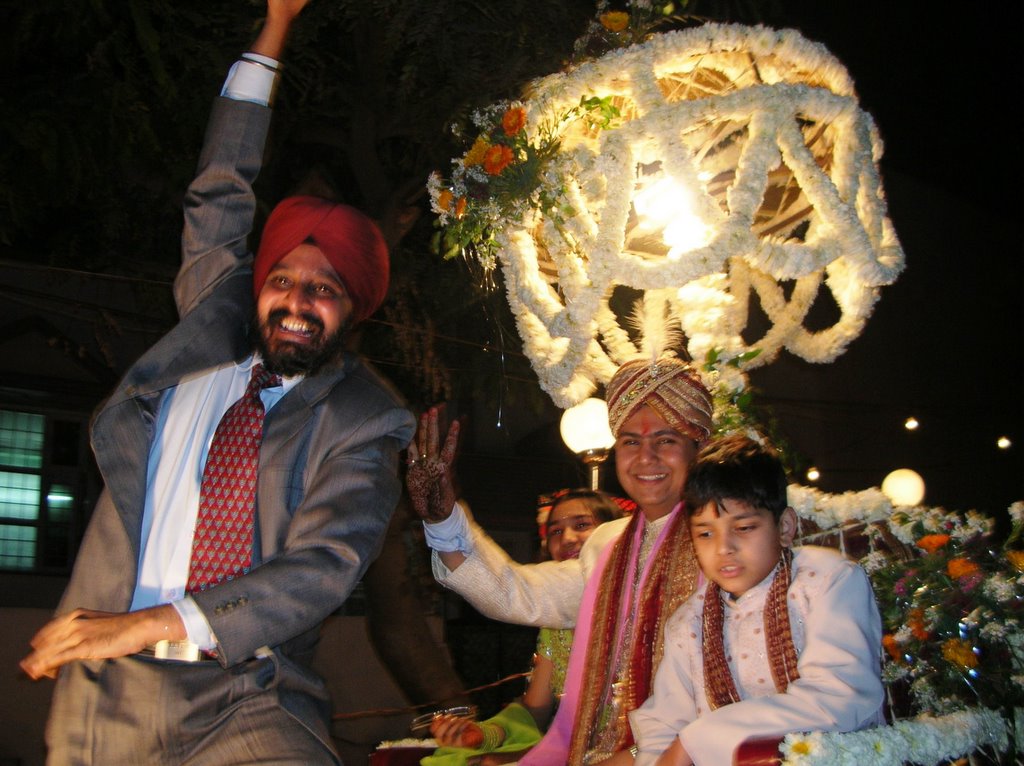
Yesterday had been to the mariage of one of my office colleague in Delhi . Had heard a lot about marriages of delhi which are big and lavish so was very much excited to go there and see the whole procession . And so did not wanted to miss it
We all of the team members left at around 8pm and reached NOIDA the palce where the marriage was to be held it was almost a drive of 11/2 hrs from our place . When we reached the proecession had already started and so we joined to dance along with the procession . All of us were dancing like anything and for the next 1 hour i danced like never before . The whole procession party was in full mood and it was gr8 dancing to the local marriage songs and the tunes .
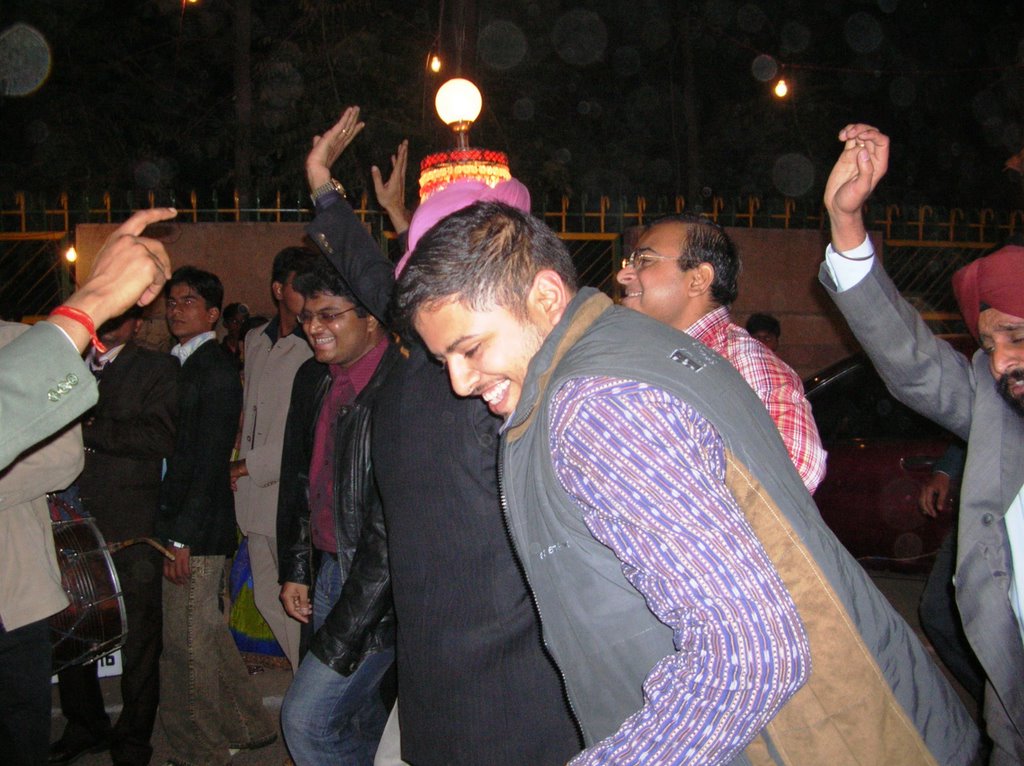
The procession then entered the marriage open ground where there were stalls for all the north India cuzine .
There were chats,fruit chats ,dhalhi bhalle ,pani puri ,and n number of other items which i could not taste them all but my taste buds were tickled by many of them
Tasted all the items i could .Just a few days back i was complaning about not having tasted any of the delhi speciality cuzine and now i was here with each and everything avalilable in hte Northern part of India .
The marraige was excellent and we saw the traditional North Indian families dancing to the tunes in the madap during the marriage taking place .
Very different from how the marriages happen the Maharashtrian culture .
It always nice to go to such functions and i enjoy it a lot where we see very differnet traditions from which we are used to all the time .
In all had a very gr8 time and enjoyed a lot .
Especially my mother was very very happy since i danced for the first time ever and enjoyed .
Thats what she tells me all the time that i should enjoy and see the new things where ever i go but most of the time i am against it .
But this time i enjoyed it to the fullest .................................
Wednesday, February 01, 2006
The taste of Chat at Delhi
At last yesterday happen to taste the chat of delhi for which it is famous for as they say
Had been advised by many foodies to eat this and that all the time when in delhi
Yesterday got chance to pounce on the action
Had the taste of Pani Puri ( they call it Gol Gappe ), Aloo Tikki with spicy curd ,and Dhahi wada (Bhalla Papadi)
And it was really tasty .
i was having pani puri on the road side nearly after 7-8 years .
so since being out of practice for such a long time
the first one I gulped down brought tears to my ears as it was really hot and spicy
but the taste was really really good and tickled my taste buds .
and even my myth was cleared that Pani Puri has paneer in it .
The Aloo Tikki and Bhalla papadi were really gr8
To say after the Delhi Metro the best thing i liked about delhi ..............
Have now made a point to visit the place for this stuff often hmmmmmmmmmmmm yummmmmmmmmmmmmmmmmy
Still lot of new things to taste and eat but as and when time comes ..................surely will have it .
Had been advised by many foodies to eat this and that all the time when in delhi
Yesterday got chance to pounce on the action
Had the taste of Pani Puri ( they call it Gol Gappe ), Aloo Tikki with spicy curd ,and Dhahi wada (Bhalla Papadi)
And it was really tasty .
i was having pani puri on the road side nearly after 7-8 years .
so since being out of practice for such a long time
the first one I gulped down brought tears to my ears as it was really hot and spicy
but the taste was really really good and tickled my taste buds .
and even my myth was cleared that Pani Puri has paneer in it .
The Aloo Tikki and Bhalla papadi were really gr8
To say after the Delhi Metro the best thing i liked about delhi ..............
Have now made a point to visit the place for this stuff often hmmmmmmmmmmmm yummmmmmmmmmmmmmmmmy
Still lot of new things to taste and eat but as and when time comes ..................surely will have it .
Monday, January 30, 2006
My Life in Delhi
Its now been alomost 2 weeks i am in Delhi
getting used the place but not quite liking it
As per me still Pune stands the best places to be on the whole earth
Though there are many good points about delhi but then still nothing to beat Pune.
The Delhi Metro in Delhi is one of the best Transportation systems i have ever seens
very clean and the ease to go around the place
Though i have not used the Local bus DST and I am sure they are better than the PMT
in pune whom punekars curse all the time but still travel by it including myself .
The palces are clean but the people are areally bad and shabby .That is the worst part of it
They eat on the road side dhabas and litter every where
Though that is seen in Pune too ,here its too bad out .
At Pune one feels very homely probably since i have been there since birth thats makes a soft corner for Pune .
But then still Pune and the whole of the Maharashtra is far more better that this
For the last couple of years i have been to few of the states in India and even then nothing to beat Maharastra and Pune for sure .
Going around Delhi would be fun but not getting time.Will surely make it a point to go around the famous places.
The cold has gone now lets see how the temperature works out now .
Till then enjoying Delhi ..............................
getting used the place but not quite liking it
As per me still Pune stands the best places to be on the whole earth
Though there are many good points about delhi but then still nothing to beat Pune.
The Delhi Metro in Delhi is one of the best Transportation systems i have ever seens
very clean and the ease to go around the place
Though i have not used the Local bus DST and I am sure they are better than the PMT
in pune whom punekars curse all the time but still travel by it including myself .
The palces are clean but the people are areally bad and shabby .That is the worst part of it
They eat on the road side dhabas and litter every where
Though that is seen in Pune too ,here its too bad out .
At Pune one feels very homely probably since i have been there since birth thats makes a soft corner for Pune .
But then still Pune and the whole of the Maharashtra is far more better that this
For the last couple of years i have been to few of the states in India and even then nothing to beat Maharastra and Pune for sure .
Going around Delhi would be fun but not getting time.Will surely make it a point to go around the famous places.
The cold has gone now lets see how the temperature works out now .
Till then enjoying Delhi ..............................
Saturday, January 28, 2006
Paneer Paneer and ............. Paneer
Its often a thing in places like Pune that when you got for dinner where one minimum dish ordered is of paneer .People like it a lot as they say
Hardly any time we make paneer at home .Hardly my mother has made matar paneer at home
but then over here Paneer is like the staple food .everthing has a touch of paneer ppl eat it day and night
and that brings one to nausea of paneer me being one of the victim of that
Gujarat had been one of the best palces for food and i enjoyed it a lot over there though there was lot of ghee and oil in the food and my less oil diet made to eat less out there but i enjoyed it no problem of food in that part of the world
Then Madhaya Pradesh and Chattisgarh we the other places i have been to .MP is a good palce and specially Indore for food there is lots of chat and spicy things available at the Chappan dukan I tasted some of them and liked them a lot
I have heard from lot many of my friends that delhi is good for chats and spicy snacks
I have still to tasted them still.
And then there is rajma ,chole etc which are made all the time
Have heard that the pani puri over here also has paneer stuffed in it .
cant dare to eat that still ............
so till now its ony paneer paneer and yes paneer ...........................
Hardly any time we make paneer at home .Hardly my mother has made matar paneer at home
but then over here Paneer is like the staple food .everthing has a touch of paneer ppl eat it day and night
and that brings one to nausea of paneer me being one of the victim of that
Gujarat had been one of the best palces for food and i enjoyed it a lot over there though there was lot of ghee and oil in the food and my less oil diet made to eat less out there but i enjoyed it no problem of food in that part of the world
Then Madhaya Pradesh and Chattisgarh we the other places i have been to .MP is a good palce and specially Indore for food there is lots of chat and spicy things available at the Chappan dukan I tasted some of them and liked them a lot
I have heard from lot many of my friends that delhi is good for chats and spicy snacks
I have still to tasted them still.
And then there is rajma ,chole etc which are made all the time
Have heard that the pani puri over here also has paneer stuffed in it .
cant dare to eat that still ............
so till now its ony paneer paneer and yes paneer ...........................
Friday, January 06, 2006
Matheran - Hill Station
Matheran (which means "forest at the top") hill station at an altitude of 803,47 metres(2530 feet).Barely 171 kms from Mumbai, Matheran, discovered by Hugh Mallet, collector of Thane district, in 1850, has long been a refuge for humidity-stricken Mumbaikars (as the residents of the metropolis are known). Its 8 sq kms cover a hilltop in the Sahyadri Hills, and its proximity to Mumbai ensures its' continued popularity for weekend getaways. All motor vehicles are prohibited in Matheran, so the air is squeaky clean. However the only mode of transport, other than walking, is on horseback and hand-pulled rickshaws.
Getting There
By Rail
The rail journey to Matheran is half the fun of your trip. Neral, the nearest railhead (21 km), is connected to Mumbai, Pune and other parts of Maharashtra. From here, a special, narrow gauge "toy train" gets you up, puffing and wheezing all the way. Except during the monsoon season (June-September), there are several trains a day on the mountain railway. These take 2 hours to cover the climb to their destination. Stations on the way have names like Water pipe and there is also the famous One Kiss Tunnel.
By Road
State Transport buses regularly ply from Mumbai and Pune. A taxi from Neral to Matheran takes about half hour to reach. Taxis stop about 2.5 km from the centre of the hill station.
The more energetic trek it from Neral.
Best time to visit
October to May. Most hotels close during the monsoons, and the walking trails turn muddy.
Sight Seeing
Matheran has 38 points at which one can get a glimpse of nature's beauty. However to cover most of these points requires at least one night stay in Matheran. Point seeing in Matheran is quiet easy due to the presence of sign boards and map. Maps are also easily available in Matheran and can be used to plan your point seeing. Given below are few points which shouldn't miss.......
Points
Matheran has many "lookout points" that provide dramatic views of the Western Ghats and lush plains dotted with villages far below. These include Panorama Point (with the most spectacular views, it's a popular place to watch the sun rise), Monkey Point, Porcupine Point (popular for its' sunset view), Louisa Point (on a plateau with views of the ruined forts Prabal and Vishalgarh), Echo Point (which really does have an echo), Rambagh Point (2 kms from Matheran towards Khandala and Karjat), Alexander Point (one km to the north of Matheran), Hart Point, Coronation Point, Chowk Point (at the extreme southern end of Matheran), and the One Tree Hill.
Lake Charlotte
The main source of drinking water for the town, Lake Charlotte sports a dam at one end and temple at the other. A popular picnic spot, it looks splendid in the monsoon, but dries up in the summer. Near the dam is the main Hindu temple, the Pisarnath Mandir.
Mount Barry
One of the highest spots in Matheran, this has splendid views. Governor's Hill, another viewpoint, is between Mount Barry and Panorama Point.
Matheran is an undulating hilltop cloaked in shady trees, that sprawls languidly at an altitude of 800 m. The journey involves an adventurous two-hour ascent in a toy train, with food and drink vendors and monkeys jumping on and off as the valley glides by sedately. Alternatively, a tough 11 km hike through thick and shady forests or a winding car drive can get you there just as well. Matheran's cliffs, with incredibely steep drops to the plains below,create stunning viewing points. These panoramic vistas, by day or by night, leave you feeling light headed. On a clear night you can even see the lights of Mumbai from Hart Point. In fact, all of Matheran is a series of such quixotically named points that are popular if isolated site for picnics and fireside revelry at night. Charlotte Lake, the Panther's Caves and Paymaster Park are Leisure, especially for children.
Weather:
Temperatures vary from 16 C in winter to 32 C in summer, with an annual rainfall of 524 cms.
October to May is the best time to visit.
Getting there
Mumbai-Neral, 90 kms. Neral-Matheran, 21 kms, Pune-Neral, 120 kms. (Neral-Matheran mountain train)
Mumbai-Neral-Matheran, 108 kms.
State Transport buses ply from Mumbai and Pune to Neral.
Precaution
No special precaution is needed at Matheran, however beware of the leach's which are found in abundance in Matheran!.
Getting There
By Rail
The rail journey to Matheran is half the fun of your trip. Neral, the nearest railhead (21 km), is connected to Mumbai, Pune and other parts of Maharashtra. From here, a special, narrow gauge "toy train" gets you up, puffing and wheezing all the way. Except during the monsoon season (June-September), there are several trains a day on the mountain railway. These take 2 hours to cover the climb to their destination. Stations on the way have names like Water pipe and there is also the famous One Kiss Tunnel.
By Road
State Transport buses regularly ply from Mumbai and Pune. A taxi from Neral to Matheran takes about half hour to reach. Taxis stop about 2.5 km from the centre of the hill station.
The more energetic trek it from Neral.
Best time to visit
October to May. Most hotels close during the monsoons, and the walking trails turn muddy.
Sight Seeing
Matheran has 38 points at which one can get a glimpse of nature's beauty. However to cover most of these points requires at least one night stay in Matheran. Point seeing in Matheran is quiet easy due to the presence of sign boards and map. Maps are also easily available in Matheran and can be used to plan your point seeing. Given below are few points which shouldn't miss.......
Points
Matheran has many "lookout points" that provide dramatic views of the Western Ghats and lush plains dotted with villages far below. These include Panorama Point (with the most spectacular views, it's a popular place to watch the sun rise), Monkey Point, Porcupine Point (popular for its' sunset view), Louisa Point (on a plateau with views of the ruined forts Prabal and Vishalgarh), Echo Point (which really does have an echo), Rambagh Point (2 kms from Matheran towards Khandala and Karjat), Alexander Point (one km to the north of Matheran), Hart Point, Coronation Point, Chowk Point (at the extreme southern end of Matheran), and the One Tree Hill.
Lake Charlotte
The main source of drinking water for the town, Lake Charlotte sports a dam at one end and temple at the other. A popular picnic spot, it looks splendid in the monsoon, but dries up in the summer. Near the dam is the main Hindu temple, the Pisarnath Mandir.
Mount Barry
One of the highest spots in Matheran, this has splendid views. Governor's Hill, another viewpoint, is between Mount Barry and Panorama Point.
Matheran is an undulating hilltop cloaked in shady trees, that sprawls languidly at an altitude of 800 m. The journey involves an adventurous two-hour ascent in a toy train, with food and drink vendors and monkeys jumping on and off as the valley glides by sedately. Alternatively, a tough 11 km hike through thick and shady forests or a winding car drive can get you there just as well. Matheran's cliffs, with incredibely steep drops to the plains below,create stunning viewing points. These panoramic vistas, by day or by night, leave you feeling light headed. On a clear night you can even see the lights of Mumbai from Hart Point. In fact, all of Matheran is a series of such quixotically named points that are popular if isolated site for picnics and fireside revelry at night. Charlotte Lake, the Panther's Caves and Paymaster Park are Leisure, especially for children.
Weather:
Temperatures vary from 16 C in winter to 32 C in summer, with an annual rainfall of 524 cms.
October to May is the best time to visit.
Getting there
Mumbai-Neral, 90 kms. Neral-Matheran, 21 kms, Pune-Neral, 120 kms. (Neral-Matheran mountain train)
Mumbai-Neral-Matheran, 108 kms.
State Transport buses ply from Mumbai and Pune to Neral.
Precaution
No special precaution is needed at Matheran, however beware of the leach's which are found in abundance in Matheran!.
Wednesday, December 07, 2005
The Sawai Gandharva Musical Festival
One of the biggest Classical Music Festival in India .This year the programme will be held from the 8-12 Dec 2005 at the New English School,Ramanbaug,Pune
HISTORY OF THE FESTIVAL -
Sawai Gandharva passed away on 12 September 1952. A private memorial concert to pay homage to him was held on the sixteenth day after his death. Sawai Gandharva's principal disciples, Smt Gangubai Hangal, Pandit Feroz Dastur and Pandit Bhimsen Joshi performed in this memorial concert as a tribute to the late guru.
In 1953, to commemorate the first anniversary of Sawai Gandharva's death, his disciples organised a music festival in his memory under the auspices of the Arya Sangeet Prasarak Mandal. This was a notable success. It was then thought that such a festival could be organised every year. The idea evoked instant and wide welcome and support The Festival in 1954 was an even greater success. Within a couple of years, the Festival grew exponentially.
Thus began the famed Sawai Gandharva Music Festival which, by now, has become one of the best-known classical music events in the country, as also a hallmark of Pune city's annual cultural calendar.
In the initial years, the festival used to be a one-day event where only vocalists from the Kirana gharana used to perform. Before long, however, it became a much sought-after platform, for vocalists from other gharanas as well as instrumentalists and dancers--established masters as well as upcoming artists-- from all over the country. Similarly, the duration was first increased to two days and then to three days.
HISTORY OF THE FESTIVAL -
Sawai Gandharva passed away on 12 September 1952. A private memorial concert to pay homage to him was held on the sixteenth day after his death. Sawai Gandharva's principal disciples, Smt Gangubai Hangal, Pandit Feroz Dastur and Pandit Bhimsen Joshi performed in this memorial concert as a tribute to the late guru.
In 1953, to commemorate the first anniversary of Sawai Gandharva's death, his disciples organised a music festival in his memory under the auspices of the Arya Sangeet Prasarak Mandal. This was a notable success. It was then thought that such a festival could be organised every year. The idea evoked instant and wide welcome and support The Festival in 1954 was an even greater success. Within a couple of years, the Festival grew exponentially.
Thus began the famed Sawai Gandharva Music Festival which, by now, has become one of the best-known classical music events in the country, as also a hallmark of Pune city's annual cultural calendar.
In the initial years, the festival used to be a one-day event where only vocalists from the Kirana gharana used to perform. Before long, however, it became a much sought-after platform, for vocalists from other gharanas as well as instrumentalists and dancers--established masters as well as upcoming artists-- from all over the country. Similarly, the duration was first increased to two days and then to three days.
Monday, December 05, 2005
KIRANA GHARANA ( VOCAL)
Gharana is a school or style of singing in Hindustani classical music. The ragas of Hindustani music have distinctive characteristics that change with gharanas and these may derive from the place of origin of a style, distinctive voices, the style of singing and the approach to music. These styles are then called gharanas.
Kirana Gharana is the most prolific of the Hindustani khayal gharanas.
The origin of Kirana Gharana is controversial. While some say Khan Sahab Abdul Karim Khan is the real founder of the gharana, others trace it back a few centuries to a line of musicinas from the village of Kirana in Uttar Pradesh. There are four known branches of this lineage of musicians. The first one has great musicians like Ustad Azim Baksh, Maula Baksh and Abdul Ghani Khan. The second branch boasts of names like Ustad Bande Ali Khan, Nanne Khan, Kale Khan and the legendary Ustad Abdul Karim Khan. The third branch has musians like Gafoor Khan, Abdul Wahid Khan, Shakoor Khan, Mashkoor Ali and Mubarak Ali. The distinguished family tradition of Mehboob Baksh, Rehman Khan, Abdul Majid Khan, Abdul Hamid Khan, Abdul Bashir Khan, followed by his sons Niaz Ahmed and Fayyaz Ahmed Khan, also express their allegiance to the Kirana tradition. Some argue that the Abdul Karim Khan's branch is the main one, others being the offshoots. In any case, the most well known and recognized branch of gharana is the one prmoted by Abdul Karim Khan. Abdul Wahid Khan also had a big influence, since a lot of the great masters of the gharana learnt under both Abdul Karim Khan and Abdul Wahid Khan.
The emphasis on elongating the notes and the importance to their resonance is a distinctive feature of this gharana. Khan Sahab Abdul Karim Khan (1872-1937) believed in the serene rendition of the notes as when playing the bin (a plucked instrument with resonators at both ends). Rehmet Khan of the Gwalior gharana is believed to have influenced Ustad Karim Khan's adoption of the direct style of presentation. Some have also indicated the influence of the sarangi (a string instrument) on the voice features of this gharana.
Kirana is the birth place of the Ustad, and situated near Kurukshetra. Ustad Karim Khan served as a musician at the Baroda and the Mysore courts and had a tremendous influence on the music of western India.
His own somewhat nasal voice led him to adopt the Carnatic style for singing the saptak (the seven notes). He preferred to sing in the slower tempo and stress the bol-alap through consonants because his own voice was not wholly suited to the lower register of notes. The aesthetic appeal was thus never marred and the continuity he desired was achieved. Other singers of the gharana, including his disciple Sawai Gandharva, used the upper register far more often than the lower. Some later singers, including Roshanara Begum and Bhimsen Joshi, sing almost equally in both octaves.
This factor has influenced the choice of ragas to those appropriate for the emphasis on the alap rather than the bandish. Karuna rasa (pathetic or sympathetic mood) is the foremost of the sentiments expressed through renditions that extend the notes gradually and use kanas (grace notes ) to fully express the raga. However, the lack of emphasis on voice projection and words led to a blurring of the lines as far as different ragas were concerned.
The emphasis on swara has led to a rather subtle tempo and rhythmic pattern, both factors allowing for the sentiment and mood to be highlighted. Due to this, the words of the bandish are not clearly enunciated and there are only a few in the Kirana gharana repertoire. Kirana includes thumri singing in its repertoire, but with the emphasis on swara rather than on emotion and an absence of the characteristic lilt of thumri singing.
Contemporary singers like Bhimsen Joshi cannot be said to sing in the pure Kirana style because of the diverse influences apparent in his singing. The swara orientation is not as strong and the tempo is no longer latent as is characteristic of the gharana. However, the emotional appeal of the pure Kirana style remains and so do the Kirana compositions.
Ragas traditionally performed by the gharana: Shuddha Kalyan, Darbari, Malkauns, Bhimpalasi, Todi, to name a few. Some ragas of Carnatic music - for example, Jogiya - are included in the repertoire.
Artists
Major artists in alphabetical order
• Ustad Abdul Karim Khan
• Ustad Abdul Wahid Khan
• Pt Basavraj Rajguru
• Pt Bhimsen Joshi
• Pt Firoz Dastur
• Smt Gangubai Hangal
• Smt Hirabai Barodekar
• Smt Krishna Hangal
• Pt Madhav Gudi
• Ustad Mashkoor Ali Khan
• Nachiketa Sharma
• Fayyaz Ahmed Khan and Niaz Ahmed Khan
• Smt Prabha Atre
• Pt Pran Nath
• Pt Rasiklal Andharia
• Smt Saraswati Rane
• Pt Sawai Gandharva
• Ustad Shakoor Khan (sarangi)
• Pt Sureshbabu Mane
Kirana Gharana is the most prolific of the Hindustani khayal gharanas.
The origin of Kirana Gharana is controversial. While some say Khan Sahab Abdul Karim Khan is the real founder of the gharana, others trace it back a few centuries to a line of musicinas from the village of Kirana in Uttar Pradesh. There are four known branches of this lineage of musicians. The first one has great musicians like Ustad Azim Baksh, Maula Baksh and Abdul Ghani Khan. The second branch boasts of names like Ustad Bande Ali Khan, Nanne Khan, Kale Khan and the legendary Ustad Abdul Karim Khan. The third branch has musians like Gafoor Khan, Abdul Wahid Khan, Shakoor Khan, Mashkoor Ali and Mubarak Ali. The distinguished family tradition of Mehboob Baksh, Rehman Khan, Abdul Majid Khan, Abdul Hamid Khan, Abdul Bashir Khan, followed by his sons Niaz Ahmed and Fayyaz Ahmed Khan, also express their allegiance to the Kirana tradition. Some argue that the Abdul Karim Khan's branch is the main one, others being the offshoots. In any case, the most well known and recognized branch of gharana is the one prmoted by Abdul Karim Khan. Abdul Wahid Khan also had a big influence, since a lot of the great masters of the gharana learnt under both Abdul Karim Khan and Abdul Wahid Khan.
The emphasis on elongating the notes and the importance to their resonance is a distinctive feature of this gharana. Khan Sahab Abdul Karim Khan (1872-1937) believed in the serene rendition of the notes as when playing the bin (a plucked instrument with resonators at both ends). Rehmet Khan of the Gwalior gharana is believed to have influenced Ustad Karim Khan's adoption of the direct style of presentation. Some have also indicated the influence of the sarangi (a string instrument) on the voice features of this gharana.
Kirana is the birth place of the Ustad, and situated near Kurukshetra. Ustad Karim Khan served as a musician at the Baroda and the Mysore courts and had a tremendous influence on the music of western India.
His own somewhat nasal voice led him to adopt the Carnatic style for singing the saptak (the seven notes). He preferred to sing in the slower tempo and stress the bol-alap through consonants because his own voice was not wholly suited to the lower register of notes. The aesthetic appeal was thus never marred and the continuity he desired was achieved. Other singers of the gharana, including his disciple Sawai Gandharva, used the upper register far more often than the lower. Some later singers, including Roshanara Begum and Bhimsen Joshi, sing almost equally in both octaves.
This factor has influenced the choice of ragas to those appropriate for the emphasis on the alap rather than the bandish. Karuna rasa (pathetic or sympathetic mood) is the foremost of the sentiments expressed through renditions that extend the notes gradually and use kanas (grace notes ) to fully express the raga. However, the lack of emphasis on voice projection and words led to a blurring of the lines as far as different ragas were concerned.
The emphasis on swara has led to a rather subtle tempo and rhythmic pattern, both factors allowing for the sentiment and mood to be highlighted. Due to this, the words of the bandish are not clearly enunciated and there are only a few in the Kirana gharana repertoire. Kirana includes thumri singing in its repertoire, but with the emphasis on swara rather than on emotion and an absence of the characteristic lilt of thumri singing.
Contemporary singers like Bhimsen Joshi cannot be said to sing in the pure Kirana style because of the diverse influences apparent in his singing. The swara orientation is not as strong and the tempo is no longer latent as is characteristic of the gharana. However, the emotional appeal of the pure Kirana style remains and so do the Kirana compositions.
Ragas traditionally performed by the gharana: Shuddha Kalyan, Darbari, Malkauns, Bhimpalasi, Todi, to name a few. Some ragas of Carnatic music - for example, Jogiya - are included in the repertoire.
Artists
Major artists in alphabetical order
• Ustad Abdul Karim Khan
• Ustad Abdul Wahid Khan
• Pt Basavraj Rajguru
• Pt Bhimsen Joshi
• Pt Firoz Dastur
• Smt Gangubai Hangal
• Smt Hirabai Barodekar
• Smt Krishna Hangal
• Pt Madhav Gudi
• Ustad Mashkoor Ali Khan
• Nachiketa Sharma
• Fayyaz Ahmed Khan and Niaz Ahmed Khan
• Smt Prabha Atre
• Pt Pran Nath
• Pt Rasiklal Andharia
• Smt Saraswati Rane
• Pt Sawai Gandharva
• Ustad Shakoor Khan (sarangi)
• Pt Sureshbabu Mane
Sunday, December 04, 2005
About Sawai Gadharva
An outstanding exponent of the Kirana gharana, Pandit Sawai Gandharva is by common consent counted among the greatest Hindustani vocalists of the twentieth century. He was a disciple of Ustad Abdul Karim Khan, the second in line after Ustad Bande Ali Khan, the founder of the Kirana gharana.
Rambhau Kundgolkar was born in Kundgol, Karnataka, in 1886. His odyssey in classical music began at a tender age, when he began learning dhrupad and dhamar from a local kirtankar. He was not yet in his teens when he started learning music in right earnest from Ustad Abdul Karim Khan. It was, however, not all smooth sailing for him, but rather an emotionally traumatic journey.
In his early teens, as is the case with most boys at that age, Rambhau's voice began to crack and undergo tonal changes that almost threatened to finish his career as a vocalist even before it could begin. It was the patience and perseverance of Abdul Karim Khan that helped his young disciple cope with his problems. The Ustad put the young Rambhau under a long and demanding programme of swarasadhana that helped him re-gain his confidence and control.
In due course, Sawai Gandharva also received training from other renowned gurus like Bhaskarbuva Bakhale and Nasir Hussain Khan of Gwalior. It helped in adding polish to a voice that was already dazzling, thanks to the grooming by his guru Utd.Abdul Karim Khan
Sawai Gandharva also excelled in the field of acting by playing several singer-actor roles in the Marathi theatre. In fact, it was because of his glorious performance on the Marathi stage that he got the appellation 'Sawai Gandharva', in the manner of the renowned singer-actor, Bal Gandharva.
Yet, music remained his first love. His exemplary concert performances continued until he came to be known as the "King of mehfils". Over the years,he developed a distinctive style of his own. In fact, music critics often explain that while both Abdul Karim Khan's teaching as well as Sawai Gandharva's voice might have had their limitations, the latter was able to tide over these drawbacks because he never blindly followed in the footsteps of his master. Besides being a vocalist par excellence, he also grew to be a wonderful teacher. His three most illustrious disciples, Gangubai Hangal, Firoz Dastur and Bhimsen Joshi, living legends in their own right, are the doyens of Kirana gayaki today.
Sawai Gandharva passed away, following a stroke, on 12th September 1952
Rambhau Kundgolkar was born in Kundgol, Karnataka, in 1886. His odyssey in classical music began at a tender age, when he began learning dhrupad and dhamar from a local kirtankar. He was not yet in his teens when he started learning music in right earnest from Ustad Abdul Karim Khan. It was, however, not all smooth sailing for him, but rather an emotionally traumatic journey.
In his early teens, as is the case with most boys at that age, Rambhau's voice began to crack and undergo tonal changes that almost threatened to finish his career as a vocalist even before it could begin. It was the patience and perseverance of Abdul Karim Khan that helped his young disciple cope with his problems. The Ustad put the young Rambhau under a long and demanding programme of swarasadhana that helped him re-gain his confidence and control.
In due course, Sawai Gandharva also received training from other renowned gurus like Bhaskarbuva Bakhale and Nasir Hussain Khan of Gwalior. It helped in adding polish to a voice that was already dazzling, thanks to the grooming by his guru Utd.Abdul Karim Khan
Sawai Gandharva also excelled in the field of acting by playing several singer-actor roles in the Marathi theatre. In fact, it was because of his glorious performance on the Marathi stage that he got the appellation 'Sawai Gandharva', in the manner of the renowned singer-actor, Bal Gandharva.
Yet, music remained his first love. His exemplary concert performances continued until he came to be known as the "King of mehfils". Over the years,he developed a distinctive style of his own. In fact, music critics often explain that while both Abdul Karim Khan's teaching as well as Sawai Gandharva's voice might have had their limitations, the latter was able to tide over these drawbacks because he never blindly followed in the footsteps of his master. Besides being a vocalist par excellence, he also grew to be a wonderful teacher. His three most illustrious disciples, Gangubai Hangal, Firoz Dastur and Bhimsen Joshi, living legends in their own right, are the doyens of Kirana gayaki today.
Sawai Gandharva passed away, following a stroke, on 12th September 1952
Friday, November 18, 2005
Trek to Harishchandragad
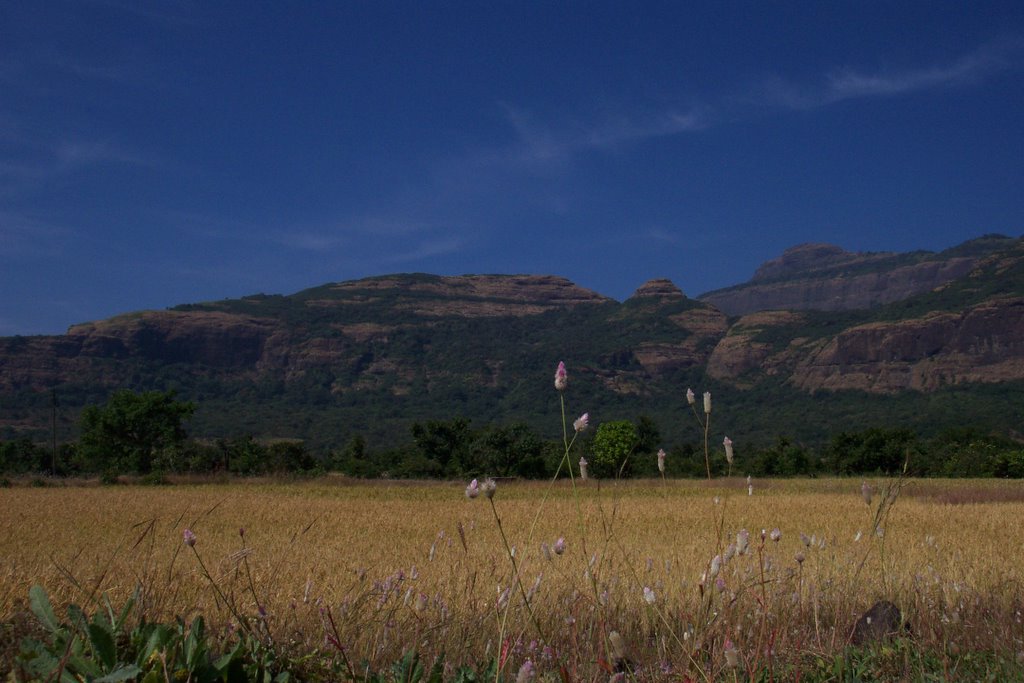
On 13th Nov we started for the Harishchadragad Trek along with 3 of my friends Sharada,Raval and Vaneeta .
Reached the Shivaji nagar Bus station at 6.30 in the morning .First we go a bus till a place called Ale Phata which in 80 kms from Pune towards Nasik which took 2 hrs .
From Ale phata one more bus till the village of Khubi we had to get down half way before the village and took a lift till the village of Khireshwar .The ride in the back of the carrier trailer was amazing with bumpy road all along the 5 km patch .
We reached the place at around 11.30 am and then started our rigourous climb for the mighty fort .
Subscribe to:
Posts (Atom)

